
“You are not special. You’re just the only one left who hasn’t signed a waiver.” — The Outer Worlds 2, marketing teaser
Some games ask you to save the universe. The Outer Worlds 2 asks if you even deserve the job.
When Obsidian’s first Outer Worlds launched in 2019, it gave players a tightly coiled corporate dystopia, Fallout: New Vegas with a sharper suit and a slightly more polite middle finger. It was funny, cynical, and deeply replayable, but it was also small. A snarky snow globe.
The sequel blows that snow globe open—and then sells the shattered glass as branded merchandise.
Escapism usually means running away. You leave your daily grind, clock into a world of alien moons and fluorescent capitalism, and forget the weight of your rent. But The Outer Worlds 2 isn’t content to let you forget yourself. It lets you perform forgetting and then watches what you do when you think nobody’s looking.
You can, for instance, roleplay as a hyper-competent scientist who refuses to get their hands dirty. The game notices. Your companions call you out for outsourcing morality. NPCs remember that you “don’t like getting your coat dusty.” You start to feel your avatar’s cowardice calcify into character. That’s not escapism as absence, it’s escapism as reflection.
In an interview with PC Gamer, Obsidian writers said they designed the sequel’s “reactive reactivity” yes, that’s the real termnto make the world behave like “a co-conspirator, not a sandbox.” You’re escaping, sure, but the game follows, whispering, I saw that.
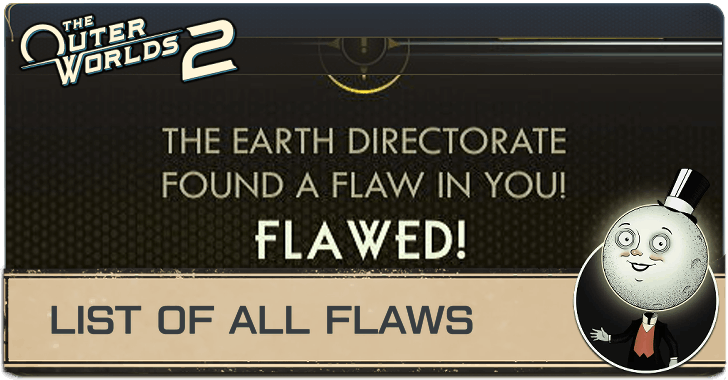
One of the most brilliant design elements Obsidian carried forward is the Flaws system, a mechanic that tracks your bad habits and offers to turn them into permanent debuffs, in exchange for an extra perk point.
Get mauled too many times by Mantisaurs? The game offers you “Entomophobia.” Take enough fall damage? “Acrophobia.” Tell one lie too many? Well, the next time you try to bluff, your hands might shake.
That’s the genius: the game gamifies your behavior, turning your playstyle into character canon. In doing so, The Outer Worlds 2 weaponizes escapism. It knows why you play. It codifies it. And then it invites you to double down.
What feels like a meta joke (“Haha, I’m scared of bugs now”) slowly becomes an emergent biography. Your version of the protagonist isn’t just different because of your dialogue choices, it’s because of your failures. You escaped reality, and the game wrote a new one for you, one flaw at a time.
Many RPGs brag about “choices that matter.” What they really mean is “three cutscenes and a moral quiz.”
The Outer Worlds 2 does something subtler and smarter. Instead of relying on binary moral forks, it makes every mechanical choice a narrative one. Say you invest your skill points in sneaking and persuasion. Sure, you can skip combat—but you’ll also start missing the thrill of confrontation. You’ll talk your way out of stories.
The game notices that too. Companions start ribbing you for “talking problems to death.” Faction leaders treat you like a political tool instead of a threat. Your identity evolves through gameplay, not exposition.
In this way, The Outer Worlds 2 inherits the New Vegas DNA of moral elasticity. Every decision feels reversible until it isn’t. The real question isn’t “What’s the right choice?” it’s “Who am I now that I’ve made it?”
The first Outer Worlds used its tight scope to ensure every choice rippled through Halcyon. The sequel, set on the planet Aurora, expands that same principle into a wider network of cause and effect.
According to GamesRadar, Aurora’s politics revolve around resource scarcity and inter-faction propaganda wars. The player can leak documents, blackmail diplomats, or deliberately misinform rival corporations. These small acts ripple outward, affecting markets, morale, and ultimately endings.
That’s what makes player agency here feel earned. When you see a city starving because of something you leaked 20 hours ago, it doesn’t feel like a checkbox, it feels like guilt. You can try to escape your decisions, but Aurora has a long memory.
In The Outer Worlds 2, escapism isn’t a nap, it’s a negotiation. The satire cuts deeper this time, too. The Spacer’s Choice propaganda returns, now joined by parody megacorps like ChronoSure, a company that “guarantees satisfaction for your past, present, and future selves.” The joke, of course, is that you can’t buy moral absolution, only rebranding.
That’s the central tension between escapism and agency: the desire to flee consequence, and the game’s insistence on giving you more of it.
The most “fun” runs the impulsive thief, the corporate sympathizer, the violent problem-solver also create the most emotional fallout. You escape responsibility only to find the game building new responsibilities around you.
It’s wickedly smart design. It’s also, frankly, what Obsidian does best: make you complicit in your own entertainment.
It’s worth noting that The Outer Worlds 2 went through significant changes during development. According to Polygon, Obsidian initially experimented with a large-scale “investigation” dialogue system, closer to Disco Elysium, before scaling it back.
The reason? The system was too prescriptive. It told players how to engage, not why. By dropping it, Obsidian doubled down on emergent choice, the idea that your behavior, not your menu selection, defines your story. In other words: they removed a mechanic to strengthen a philosophy. Fewer dialogue trees, more consequences that bloom naturally. That’s what makes this game special. It’s not afraid to give you enough rope to hang yourself with—and then laugh as a corporate jingle plays in the background.
Escapism in The Outer Worlds 2 isn’t about pretending to be someone else. It’s about experimenting with who you might be, if nobody could stop you. It gives you the fantasy of control and then tests what you’ll do when control breaks. It’s messy, it’s funny, and it’s quietly profound. And maybe that’s why this franchise sticks around. The Outer Worlds doesn’t ask, “What if capitalism went to space?” It asks, “What if you did and what would you sell first?”