
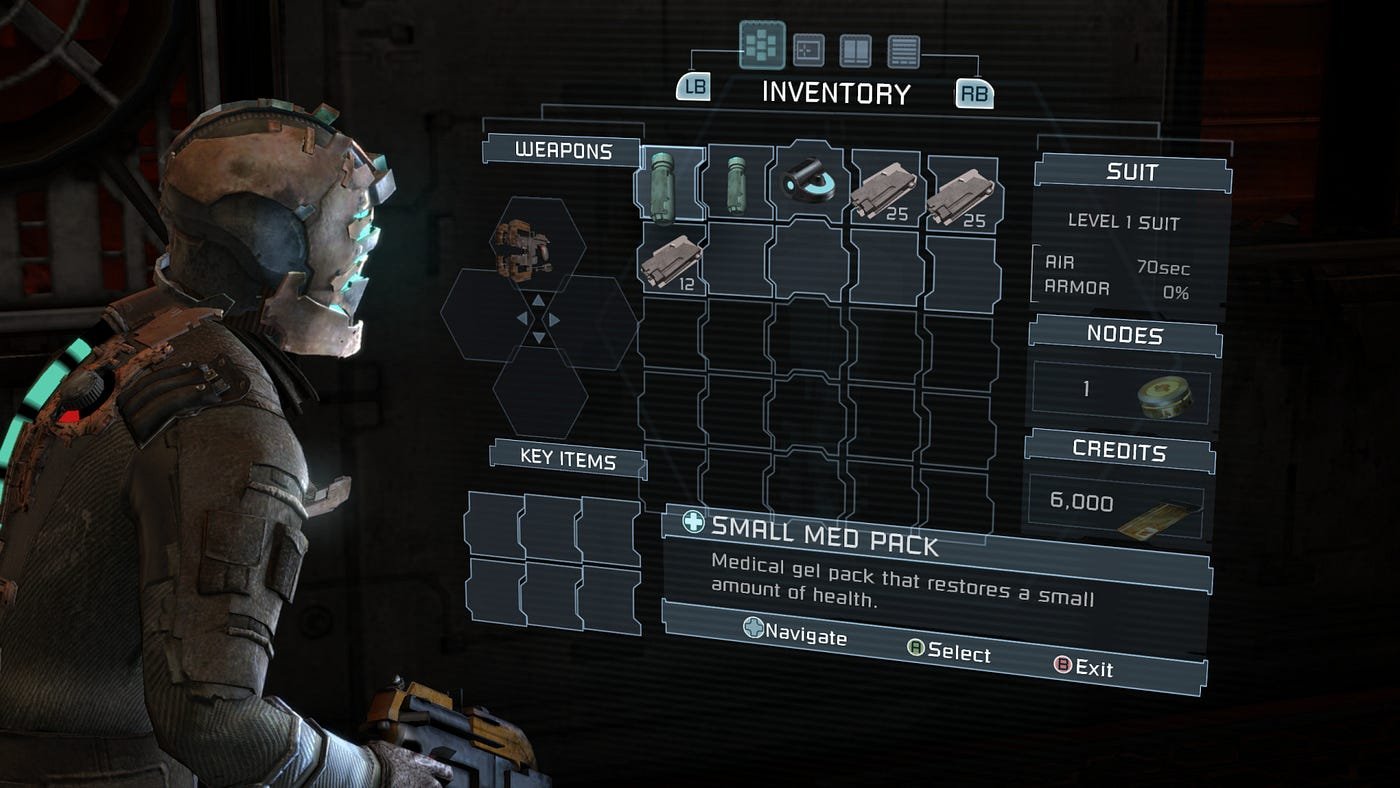
User interfaces are often seen as purely functional, but some games transform UI into an active storytelling device. Titles like Dead Space, Persona 5, and NieR: Automata use interface design to reinforce narrative tone and deepen immersion.
In Dead Space, health bars and menus are integrated directly into the character’s suit and environment. This eliminates traditional HUD clutter while reinforcing vulnerability and isolation. The UI becomes part of the world, making players feel physically present within it.
Persona 5 uses bold typography, aggressive motion, and high-contrast colors to reflect its themes of rebellion and youth culture. Menus feel energetic and expressive, reinforcing the emotional state of the characters and the rhythm of the story.
Meanwhile, NieR: Automata uses its UI as a narrative device itself. HUD elements are tied to the protagonist’s systems, and their removal during key moments reinforces vulnerability and thematic questions about identity and consciousness.
When UI supports narrative, it stops being invisible and starts becoming expressive. It communicates mood, perspective, and story context without breaking immersion.
Environmental storytelling doesn’t stop at architecture or sound, it extends to every layer of interaction. When UI design aligns with narrative intent, it becomes another way games tell stories without words.